

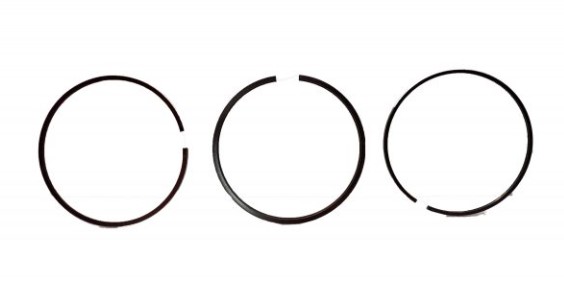
Piston rings are small components, but worn or damaged rings can cause major problems in a diesel truck engine. Common symptoms of a bad piston rings include excessive blue-grey exhaust smoke, high engine-oil consumption, loss of power, excessive crankcase blow-by and difficult starting or rough engine operation.
These symptoms occur because damaged rings can no longer maintain the correct seal between the piston and cylinder wall. The result can be loss of compression, engine oil entering the combustion chamber and combustion gases escaping into the crankcase.
Because several other engine problems can produce similar symptoms, piston-ring failure should be properly diagnosed before the engine is dismantled.
5 Symptoms Of A Bad Piston Rings
Piston rings are metal rings fitted into grooves around each piston inside an internal combustion engine.
As the piston travels up and down inside the cylinder or cylinder liner, the rings maintain contact with the cylinder wall.
Their main functions are to:
- seal combustion pressure inside the cylinder;
- control the amount of engine oil remaining on the cylinder wall;
- prevent excessive oil from entering the combustion chamber; and
- transfer heat from the piston toward the cylinder wall.
Many engines use different types of rings for compression sealing and oil control.
Because the pistons, cylinders, connecting rods and crankshaft operate as part of the same system, piston-ring condition can significantly affect the performance of the entire {diesel truck engine | https://kch-ind.com/truck-engines-powering-progress/}.
1. Blue or Blue-Grey Exhaust Smoke
One of the most recognisable signs of worn piston rings is persistent blue or blue-grey exhaust smoke caused by engine oil entering the combustion chamber and burning with the fuel.
Piston rings normally control the oil film on the cylinder walls. When the oil-control rings or cylinder surfaces become worn, more oil can remain above the piston and reach the combustion chamber.
The driver may notice smoke particularly:
- under acceleration;
- when the engine is under load; or
- as engine wear becomes more severe.
However, exhaust smoke alone does not prove that piston rings have failed.
Turbocharger oil leakage, valve-guide or valve-seal problems and other engine faults can also cause oil to enter the combustion process. The source needs to be diagnosed before parts are replaced.
Different smoke colors can also indicate different problems. Our guide to diesel exhaust smoke discusses another common diagnostic symptom.
2. Excessive Engine-Oil Consumption
Another common symptom of bad piston rings is an engine that requires oil to be topped up more frequently than normal without an obvious external leak.
Worn oil-control rings may allow excessive lubricant to move into the combustion chamber, where it is burned.
Signs can include:
- falling engine-oil level;
- frequent oil top-ups;
- blue-grey exhaust smoke; and
- oily deposits associated with combustion.
A gradual change in oil consumption is particularly important to monitor on fleet vehicles because maintenance records can reveal trends that a driver might otherwise overlook.
Excessive oil consumption has multiple possible causes, so external leaks, turbocharger problems and other internal engine components should also be inspected.
3. Loss of Power and Low Compression
Piston rings help keep combustion pressure above the piston.
When the rings or cylinder surfaces become excessively worn, combustion gases can escape past the piston instead of exerting their full force on it. This reduces effective cylinder compression.
The driver may experience:
- poor acceleration;
- reduced pulling power;
- poor performance under load; or
- a general decline in engine response.
Heavy commercial vehicles may make the problem especially noticeable when climbing hills or carrying substantial loads.
Low compression does not automatically mean the piston rings are faulty. Valves, cylinder-head components, pistons and cylinder damage can also cause compression loss.
A proper compression or cylinder-leakage assessment can help identify the source.
For a broader look at related components, see our truck engine parts guide.
4. Excessive Blow-By or Crankcase Pressure
Some combustion gas naturally passes the piston rings during engine operation. This is known as blow-by.
When piston rings or cylinder liners become badly worn, substantially more combustion gas may escape from the cylinder into the crankcase.
Excessive blow-by can create abnormally high crankcase pressure.
Possible signs include:
- increased vapour from the crankcase ventilation system;
- abnormal pressure within the crankcase;
- oil being pushed through seals or ventilation components; and
- increased engine-oil contamination.
Diesel engines use crankcase ventilation systems to manage these gases. Problems within the ventilation system itself can therefore produce some similar symptoms and should be checked during diagnosis.
An external oil leak should not automatically be blamed on the piston rings. A damaged gasket, seal or ventilation system may be responsible.
5. Difficult Starting or Rough Engine Operation
Diesel engines depend heavily on adequate cylinder compression to generate the temperatures required for efficient compression ignition.
Severely worn piston rings can reduce cylinder compression enough to contribute to:
- difficult starting;
- extended cranking;
- uneven engine operation;
- rough idle; or
- poor combustion after startup.
The symptoms may become more noticeable when the engine is cold.
Again, piston rings are only one possible cause. Fuel injectors, fuel pressure, batteries, starter performance, valve sealing and other factors can also contribute to hard starting or rough operation.
Diagnosis should therefore consider the complete engine rather than replacing piston rings based on one symptom.
What Causes Piston Rings to Wear Out?
Piston rings operate under high temperatures, pressure and continuous movement. Wear can occur gradually over a long operating life or accelerate because of another engine problem.
Common contributing factors include:
Poor Lubrication
Incorrect oil, insufficient lubrication or extended oil-change intervals can increase friction between the rings and cylinder surfaces.
Contaminated Engine Oil
Abrasive particles circulating through the engine can accelerate wear of rings and cylinder liners.
Engine Overheating
Excessive engine temperature can damage pistons, rings, cylinder surfaces and lubrication.
Contaminated Intake Air
If dust bypasses a damaged, incorrect or poorly fitted air filter, abrasive particles may enter the cylinders and accelerate wear.
Incorrect Assembly
Improper ring installation, incorrect clearances or other errors during an engine rebuild can cause premature problems.
Following appropriate {diesel engine maintenance | https://kch-ind.com/how-to-maintain-a-diesel-engine/} practices helps protect not only the piston rings but also cylinders, bearings and other internal engine components.
Do Bad Piston Rings Always Need to Be Replaced?
If testing confirms that the rings are mechanically worn or damaged, replacement will normally require substantial engine disassembly.
However, replacing only the rings may not solve the problem.
The workshop should also evaluate the condition and dimensions of related components such as:
- pistons;
- piston grooves;
- cylinder liners or cylinder bores;
- bearings;
- connecting rods; and
- relevant seals and gaskets.
If cylinder wear is excessive, additional machining or replacement components may be necessary.
This is why piston-ring repair should be approached as an engine-condition problem rather than simply buying a new set of rings.
If you are sourcing pistons, piston rings, liners or related, do contact our sales rep.
I was about to head to work this morning using my car when I noticed smoke coming out of my vehicle after starting it. I appreciate you explaining to us that thick and dark gray or blue-colored smoke usually indicates worn-out piston rings, which will eventually lead to the engine oil leaking. I’ll be sure to contact a mechanic soon while I look for replacement piston rings to buy.
I have a Toyota Nadia with 3s engine this car has a problem of breaking off the timing belt what can be the problem