

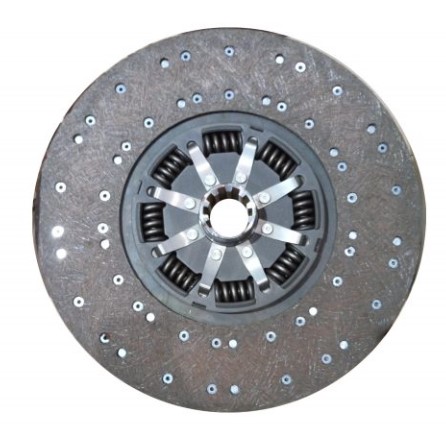
The most common signs of a failing heavy duty truck clutch include clutch slipping, poor acceleration under load, difficulty selecting gears, incomplete disengagement, abnormal clutch pedal behaviour, unusual noises, vibration or grabbing during engagement, and a burning smell.
However, these symptoms do not always mean the clutch disc itself has failed. The pressure plate, release bearing, clutch brake, linkage, hydraulic system, flywheel and even the transmission can produce similar symptoms.
The purpose of recognising these warning signs is therefore to identify when the truck needs diagnosis—not to replace the clutch based on one symptom alone.
8 Signs of a Failing Heavy Duty Truck Clutch
1. The Clutch Slips Under Load
Clutch slipping is one of the clearest indications that something within the clutch system requires attention.
A slipping clutch occurs when the clutch cannot maintain sufficient friction and clamping force to transfer engine torque effectively to the transmission.
A driver may notice that engine RPM rises during acceleration while road speed does not increase at the expected rate. The symptom may become particularly noticeable when the truck is heavily loaded, accelerating uphill or operating in a higher gear.
Possible causes include:
- worn clutch friction material;
- insufficient clamping force;
- contamination from oil or grease;
- problems with the clutch release system;
- incorrect clutch adjustment; or
- an unsuitable or incorrectly installed clutch.
Continued slipping generates additional heat and can accelerate damage to the friction surfaces.
2. The Truck Accelerates Poorly Even Though Engine RPM Increases
Poor acceleration by itself does not prove that the clutch is failing. Engine, fuel-system and transmission problems can also reduce vehicle performance.
The more useful diagnostic clue is the relationship between engine speed and vehicle speed.
If the engine responds normally and RPM increases but the truck does not accelerate proportionately, clutch slip should be investigated.
This loss of torque transfer happens because the clutch is no longer maintaining a solid connection between the engine and transmission.
Drivers should report when the problem occurs—such as during hill climbs, heavy acceleration or when carrying a full load—because operating conditions can help a technician reproduce and diagnose the fault.
For an overview of how the semi truck clutch transfers engine torque, see our main clutch guide.
3. The Truck Is Difficult to Shift Into Gear
Difficulty selecting a gear can indicate that the clutch is not disengaging completely.
When the clutch pedal is depressed, the clutch should interrupt torque transfer so the transmission can be shifted. If the clutch continues to drag, the transmission input shaft may continue rotating when it should be released.
Possible causes include problems with:
- clutch adjustment;
- release bearing or release mechanism;
- mechanical linkage;
- hydraulic actuation;
- pilot bearing;
- clutch disc; or
- clutch brake on applicable heavy-duty manual transmissions.
Grinding when selecting first or reverse while the vehicle is stationary can be particularly useful diagnostic information.
However, not every gear-selection problem originates in the clutch. Transmission components and shift mechanisms should also be considered during diagnosis.
4. The Clutch Does Not Fully Disengage
A clutch that remains partially engaged when the pedal is depressed can cause vehicle creep, difficult shifting or gear grinding.
This condition is sometimes called clutch drag or poor release.
It is important not to assume that poor disengagement automatically means the friction disc has worn out. The fault may originate in the release system instead.
Release-system components can include the release bearing, fork, linkage, hydraulic components and other actuation parts depending on the truck design.
If the truck continues trying to move with the clutch pedal fully depressed, or repeatedly grinds when selecting a starting gear, the clutch system should be inspected.
Our guide to truck clutch components explains how these parts work together.
5. The Clutch Pedal Feels Different
Changes in clutch pedal behaviour can provide useful early warning of a clutch or actuation problem.
Depending on the system, a driver may notice:
- unusually high or low engagement;
- excessive pedal travel;
- reduced free play;
- increased pedal effort;
- inconsistent resistance; or
- a pedal that does not return normally.
The important clue is often a change from the truck’s normal pedal behaviour.
Pedal feel must also be interpreted according to the clutch actuation system. For example, hydraulic clutch systems do not provide exactly the same free-pedal feedback as traditional mechanical linkage systems.
For that reason, an arbitrary pedal measurement should not be applied to every heavy-duty truck. The correct adjustment and inspection specification should come from the clutch, transmission or vehicle manufacturer.
6. You Hear Unusual Noises During Clutch Operation
Noise can help identify a clutch-system problem, but the timing of the noise matters.
A noise that changes when the clutch pedal is pressed or released may direct attention toward the clutch release system, pilot bearing, transmission input components or other related parts.
Whistling, rattling, squealing or knocking should therefore be described accurately to the technician, including whether the noise occurs when:
- the clutch is engaged;
- the pedal is depressed;
- the truck starts moving;
- a gear is selected; or
- the vehicle is under load.
A noisy clutch is not automatically a worn clutch disc. Correct diagnosis is important because replacing the friction disc will not solve a problem caused by another bearing or release component.
7. The Clutch Grabs, Shudders or Vibrates
A healthy clutch should transfer torque progressively during vehicle launch.
If the truck shakes, grabs or produces noticeable vibration as the clutch engages, the friction surfaces may not be engaging smoothly.
Possible causes can include contamination, damaged friction surfaces, clutch-component problems or an incorrect replacement component.
Problems outside the clutch can also contribute. Engine or transmission mounting issues, for example, can affect how vibration is transmitted through the driveline.
This is another reason why clutch symptoms should be diagnosed as a system rather than assuming that every engagement problem requires a new clutch disc.
8. You Notice a Burning Smell
A burning smell after repeated clutch operation can indicate excessive clutch heat.
This can occur when the friction surfaces are allowed to slip for too long, such as during difficult starts, excessive clutch riding or when an already worn or incorrectly adjusted clutch cannot fully engage.
Persistent slipping can generate substantial heat and accelerate deterioration of the clutch friction material and surrounding surfaces.
A burning smell should not be described simply as “metal-on-metal” contact. The more important issue is excessive friction and heat.
If the smell is accompanied by slipping, smoke or a major change in clutch operation, the truck should be inspected rather than continuing normal operation.
Does a Clutch Problem Always Mean the Clutch Needs Replacement?
No. A clutch symptom does not automatically mean the complete clutch assembly needs replacement.
Heavy-duty clutch troubleshooting should first identify the driver’s specific complaint, investigate possible causes and determine the appropriate repair.
Some problems can originate in adjustment, linkage, hydraulic components, release-system wear or clutch-brake operation. In other cases, inspection may confirm that the clutch disc, pressure plate or other major components have reached the end of their usable life.
When replacement is confirmed, our truck clutch replacement guide explains which components should be inspected and what affects the overall repair.
What Should You Do When Clutch Failure Is Suspected?
Start by recording exactly what the driver experiences and when it happens.
Useful information includes the operating load, selected gear, road gradient, engine speed, whether the vehicle is hot or cold, pedal behaviour and any unusual sounds or smells.
A technician can then inspect the clutch and related systems to determine whether the problem involves adjustment, actuation, a worn component or complete clutch replacement.
There is no need to replace a clutch based only on mileage either. If replacement timing is your main concern, read how often truck clutches need replacement.
When replacement is necessary, choosing correctly specified quality clutch parts is important for commercial vehicles where repeat repairs can result in additional labour and fleet downtime.
Feel free to contact us if you need help identifying clutch parts for a heavy-duty truck or fleet