

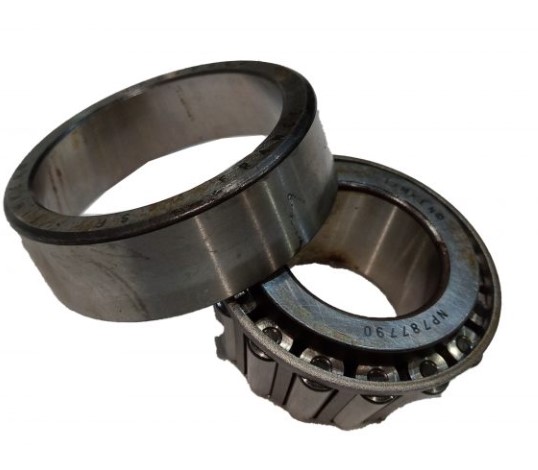
Finding reliable Singapore bearing suppliers is especially important when the bearings are intended for trucks, buses, trailers and other commercial vehicles. Bearings may be relatively small components, but they support rotating assemblies, control friction and help components such as wheels, hubs, shafts and driveline systems operate smoothly.
The challenge is not simply finding a bearing with the correct diameter. Commercial vehicles operate under significant loads, long operating hours and demanding road conditions, so bearing type, dimensions, load rating, sealing and application all need to be considered.
If you are purchasing bearings for a fleet, workshop or commercial vehicle parts business, understanding these factors can make identifying the correct replacement considerably easier.
What Does a Bearing Do in a Commercial Vehicle?
A bearing allows one component to rotate or move relative to another while reducing friction and supporting the forces acting on the assembly.
In commercial vehicles, bearings can be used in areas including:
- Wheel hubs
- Axles
- Transmissions
- Differentials
- Drive shafts
- Engines and auxiliary equipment
- Pulleys and rotating accessories
A wheel bearing, for example, allows the wheel and hub assembly to rotate while supporting the vehicle’s weight and forces generated during driving, braking and cornering.
Bearings used elsewhere in the driveline may support rotating shafts and help maintain correct alignment.
For a broader look at the components used across heavy vehicles, see our truck bearing parts guide.
Common Bearings Available From Singapore Bearing Suppliers
There is no single bearing design suitable for every commercial vehicle application. Different bearing types are engineered around particular combinations of load, speed, available space and operating conditions.
Deep Groove Ball Bearings
Deep groove ball bearings are among the most widely used bearing designs.
Their construction allows them to handle radial loads as well as a degree of axial load. They also operate effectively at relatively high rotational speeds, making them suitable for many automotive and industrial applications.
Depending on the application, they may be supplied as open, shielded or sealed bearings.
Sealed and Shielded Ball Bearings
Bearing seals and shields help protect internal rolling elements and lubricant against contamination.
A sealed bearing provides greater protection against dirt, dust and moisture, while shielded designs can provide protection with relatively low rotational resistance.
The correct choice depends on the environment and the manufacturer’s specification for the assembly.
Self-Aligning Ball Bearings
Self-aligning ball bearings can accommodate a limited amount of angular misalignment between the shaft and bearing housing.
This characteristic makes them useful for particular applications where shaft deflection or small alignment differences may occur.
They should not, however, be selected as a substitute for correcting serious mechanical misalignment.
Roller Bearings for Heavy-Duty Applications
Roller bearings use rollers rather than balls to carry loads. The larger contact area between the rolling elements and raceways can make certain roller bearing designs particularly suitable for demanding commercial vehicle applications.
Tapered Roller Bearings
Tapered roller bearings are commonly associated with wheel hubs, axles and other applications where both radial and axial forces need to be supported.
The tapered geometry of the rollers and raceways allows the bearing to handle combined loading.
Correct adjustment, lubrication and installation are particularly important because excessive or insufficient bearing clearance can affect operating life.
Cylindrical Roller Bearings
Cylindrical roller bearings have rollers with a relatively large contact area against the raceway.
They are capable of supporting substantial radial loads and can be suitable for high-speed rotating applications depending on their design.
Commercial vehicle transmissions and other rotating machinery may use cylindrical roller bearings where considerable radial load capacity is required.
Needle Roller Bearings
Needle roller bearings use long, narrow cylindrical rollers.
Their small cross-sectional height makes them useful where installation space is limited but relatively high radial load capacity is required.
Needle bearings can therefore be found in various transmission, driveline and mechanical assemblies.
How Do You Choose the Correct Commercial Vehicle Bearing?
Professional Singapore bearing suppliers will usually need more information than simply the vehicle manufacturer’s name.
Providing accurate identification information reduces the risk of receiving a component that appears similar but has different internal specifications.
Useful information can include:
- Vehicle make and model
- Vehicle identification or chassis information
- Original equipment part number
- Existing bearing number
- Inner diameter
- Outer diameter
- Bearing width
- Bearing type
- Installation location
- Axle, transmission or assembly information
If an old bearing is available, markings on the bearing rings can often help identify the correct replacement.
For commercial fleets, retaining vehicle and component records can make future parts identification considerably faster.
Why Bearing Quality Matters in Trucks and Buses
Commercial vehicle bearings frequently operate for long periods while exposed to load, heat, vibration and contamination.
A bearing that is unsuitable for the application can contribute to excessive noise, vibration, temperature increases and premature wear.
In wheel-end applications, deterioration can also affect hub operation and surrounding components.
This is why bearing selection should consider more than price alone. Important factors include manufacturing quality, correct specifications, vehicle compatibility and the operating conditions the bearing will encounter.
Where a particular manufacturer is required, buyers may also prefer to source through an established distributor. For example, customers specifically looking for the brand can learn more about FAG bearings in Singapore.
Bearings Are Part of a Larger Driveline System
Bearings should not always be considered in isolation.
A commercial vehicle driveline transfers engine torque through components such as the transmission, drive shaft, differential and axle before power reaches the wheels.
Bearings support several rotating components within this system.
For example, a driveline vibration may involve a bearing, but it could also originate from a universal joint, drive shaft imbalance, mounting component or another part of the drivetrain.
You can learn how another important driveline component works in our guide to {truck drive shafts.
Vehicles with more complex transmission, axle or steering concerns may require system-level diagnosis rather than replacing individual parts based solely on symptoms. For relevant ZF-equipped commercial vehicles, our driveline system support page provides additional information.
Looking for Commercial Vehicle Bearings in Singapore?
Whether you need wheel bearings, tapered roller bearings, ball bearings or other bearing products, start with as much vehicle and component information as possible.
Providing the vehicle model, bearing reference, dimensions or OE part number allows the supplier to identify the application more accurately and reduces unnecessary delays.
Kian Chue Hwa supports commercial vehicle parts requirements from Singapore, including bearing and driveline applications.
If you are looking for Singapore bearing suppliers for your workshop, fleet or parts business, contact KCH.