

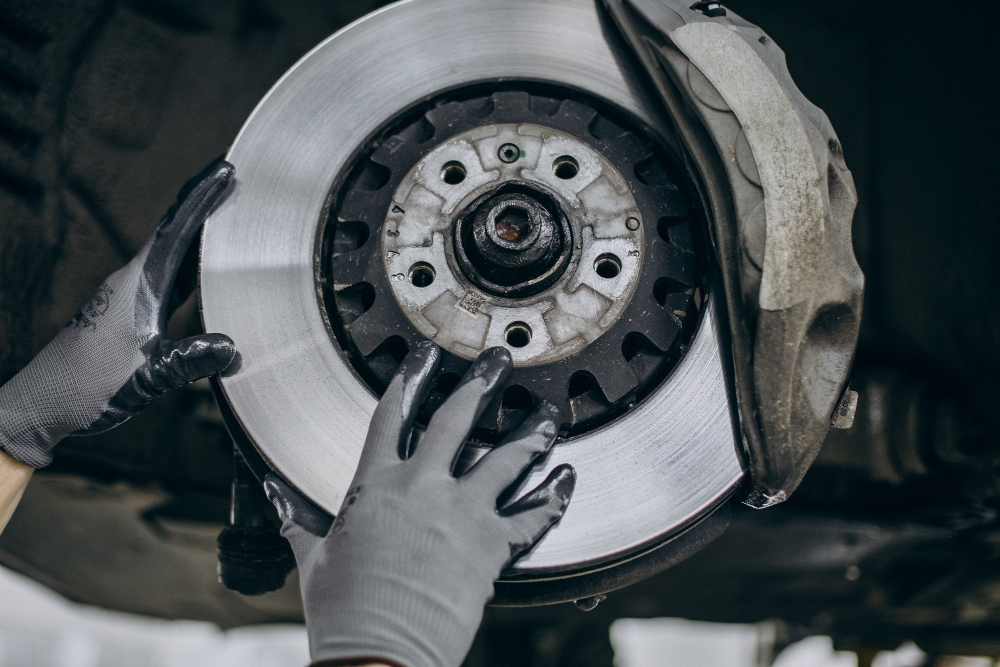
Understanding genuine vs OEM vs aftermarket truck parts is important because the terms describe how replacement components relate to manufacturers and supply channels. They do not automatically tell you whether one individual part will last longer than another.
A fleet operator may encounter several suitable replacement options for the same truck: a vehicle-manufacturer branded part, a component from an original-equipment supplier, and one or more aftermarket alternatives.
The right choice depends on the component, manufacturer, specification, availability, warranty requirements and cost of keeping the vehicle operational.
Genuine vs OEM vs Aftermarket: Quick Comparison
| Factor | Genuine Parts | OEM / OE-Supplier Parts | Aftermarket Parts |
|---|---|---|---|
| Branding | Vehicle manufacturer’s brand | Component manufacturer’s brand | Independent manufacturer’s brand |
| Supply channel | Vehicle manufacturer’s parts network | Component supplier / distributor | Independent aftermarket |
| Vehicle application | Manufacturer-listed application | Application depends on supplier catalogue | Application depends on manufacturer catalogue |
| Choice | Usually limited to manufacturer’s offering | Moderate | Often widest |
| Price | Often higher | Varies | Varies widely |
| Availability | Depends on dealer/distributor network | Depends on supplier | Often broad |
| Quality | Defined by vehicle manufacturer’s parts programme | Depends on product and supplier relationship | Ranges by manufacturer and product range |
The table is a procurement guide rather than a quality ranking. A category label alone is not enough to determine whether a component is appropriate.
What Are Genuine Truck Parts?
Genuine truck parts are replacement components sold under the vehicle manufacturer’s brand and through its recognised replacement-parts channel.
They typically carry:
- the vehicle manufacturer’s branding;
- its service part number;
- manufacturer-branded packaging; and
- an application listed within the manufacturer’s parts system.
The vehicle manufacturer does not necessarily physically manufacture every genuine component.
Commercial vehicles contain systems supplied by specialist manufacturers covering areas such as braking, steering, filtration, transmissions, bearings and electrical components. These suppliers may manufacture components to requirements established for the vehicle programme.
The important characteristic of a genuine part is therefore its commercial relationship with the vehicle manufacturer’s replacement-parts network.
What Does OEM Mean?
OEM stands for Original Equipment Manufacturer.
This is where automotive parts terminology becomes confusing.
In its strict manufacturing sense, an OEM is a company producing equipment or components used in another manufacturer’s finished product.
Within the replacement-parts market, however, people often say “OEM part” when referring to a component sold under the original component supplier’s own brand rather than the vehicle manufacturer’s branding.
For example, a specialist manufacturer may supply a component for installation during vehicle production and also sell replacement components under its own brand.
However, buyers should not automatically assume that every supplier-branded replacement is identical to the genuine part simply because the manufacturer also supplies original equipment.
Specifications, product versions and distribution arrangements can differ.
What Are Aftermarket Truck Parts?
Aftermarket truck parts are replacement components supplied outside the vehicle manufacturer’s genuine-parts channel.
They may be manufactured by companies specialising in replacement products for:
- engines;
- filtration;
- braking;
- steering;
- suspension;
- cooling;
- electrical systems; and
- driveline components.
The aftermarket is extremely broad.
One manufacturer may produce economy-oriented components, while another may specialise in premium commercial vehicle products designed for demanding fleet applications.
For this reason, aftermarket is a market category, not a single quality grade.
Buyers interested in higher-specification alternatives can explore our guide to premium aftermarket components.
Are Genuine Parts Better Than OEM or Aftermarket Parts?
Not automatically in every application.
Genuine parts provide a straightforward route to obtaining the vehicle manufacturer’s specified service replacement, which can simplify identification and procurement.
However, established component manufacturers and aftermarket brands may also provide suitable replacement products.
Actual reliability depends on factors such as:
- manufacturing quality;
- material specification;
- correct fitment;
- application;
- installation;
- maintenance; and
- vehicle operating conditions.
Our guide to the reliability of replacement truck partsThe important distinction is:
Parts category describes the sourcing relationship. Reliability describes how the individual product performs in its intended application.
They are related procurement considerations, but they are not the same thing.
Which Option Is Usually More Affordable?
Genuine parts may carry higher pricing because they are supplied through the vehicle manufacturer’s branded parts programme.
OEM-supplier and aftermarket alternatives can sometimes offer lower purchase prices, but there is no universal pricing order.
An established premium aftermarket component, for example, may cost more than another replacement option.
Fleet operators should therefore compare:
part price + freight + installation + downtime + expected service life
rather than assuming one category will always be cheaper.
If controlling maintenance expenditure is the priority, see our guide on how to procure affordable truck parts without compromising suitability.
Which Category Offers the Most Choice?
Aftermarket sourcing generally provides the greatest number of manufacturer choices because multiple companies may produce replacement products for the same vehicle application.
That choice can be valuable when:
- genuine stock is unavailable;
- a truck model is older;
- several price levels are required;
- fleets have preferred component brands; or
- operators want a particular product specification.
More choice also means more evaluation.
Fleet buyers need to know who manufactured the part and whether that product is suitable for the intended application.
Does Genuine, OEM or Aftermarket Mean the Part Is Authentic?
Authenticity is a separate question.
A genuine part can be counterfeit. An OEM-branded product can be counterfeit. An aftermarket manufacturer’s product can also be counterfeited.
Likewise, a legitimate aftermarket component does not become “fake” simply because it is not genuine.
When product origin is uncertain, buyers should verify that automotive parts are legitimate through supplier identity, manufacturer information, part numbers, packaging and traceability.
What About Warranty?
Warranty terms depend on the vehicle, component, manufacturer, supplier and applicable commercial conditions.
Do not assume that:
- every genuine part carries the same warranty;
- every OEM-supplier product has identical coverage;
- all aftermarket parts have limited warranties; or
- installing an aftermarket component automatically changes every vehicle warranty.
Instead, verify the terms that apply to the specific vehicle and component before purchase.
For fleets, warranty should be one procurement attribute alongside availability, expected service life, purchase price and supplier support.
When Should You Choose Genuine, OEM or Aftermarket Truck Parts?
A practical decision framework is:
Choose genuine parts when:
You specifically require the vehicle manufacturer’s branded replacement, manufacturer parts support or a straightforward service-part reference.
Consider OEM / OE-supplier products when:
A recognised original-equipment component manufacturer offers a correctly specified replacement through its own distribution channel.
Consider aftermarket parts when:
You want more manufacturer choice, different price levels, wider availability or specialised replacement options.
A dependable truck parts supplier can also help identify appropriate options when several alternatives exist.
Choose the Right Part for the Application, Not Just the Label
The genuine vs OEM vs aftermarket decision should not be reduced to “best, second best and cheapest.”
These terms primarily describe manufacturer relationships, branding and supply channels.
For commercial vehicles, the better procurement question is:
Which correctly specified component provides the appropriate reliability, availability, support and total cost for this truck’s operating requirements?
Genuine parts may be the appropriate choice in one situation, while a recognised OEM-supplier or aftermarket component may make more sense in another.
What matters is understanding exactly what you are buying.
At KCH, we carry renown brands for years now and have the domain knowledge to better assist you based on your requirements and needs.
For any help with your parts, you can reach us a +65 6846 9989 or use the contact form here.
Getting a mini truck has been one of the long-term plans for my uncle as he tries to expand his timber business, but first he needs to make sure he won’t have to worry about its maintenance. That’s why I’m so thankful for your statement on how genuine auto parts tend to have better quality compared to other types of sellers. I’ll ask him to go through this info when making a purchase later on.