

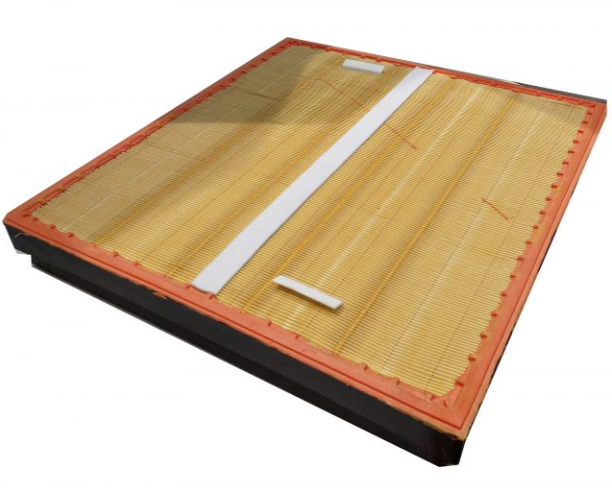
Diesel truck fuel filters protect the fuel injection system by removing solid contaminants and, in many systems, separating water before the diesel reaches sensitive pumps and injectors. The three main filtration roles found in heavy-duty diesel applications are the primary fuel filter, fuel-water separator and secondary or final fuel filter.
These are best understood as filtration functions or stages, rather than assuming every truck has three completely separate filter housings.
For example, many commercial vehicles combine the primary filter and water separator into one assembly. Other systems use multiple filter elements arranged in stages.
What matters is how progressively cleaner and drier fuel reaches the engine.
The 3 Types of Diesel Truck Fuel Filters
Diesel can collect contamination at several stages between production and combustion.
Possible contaminants include:
- Dust
- Dirt
- Rust
- Tank debris
- Fine abrasive particles
- Water
- Contamination introduced during refuelling or servicing
Older diesel fuel systems were generally more tolerant of some contamination than modern high-pressure systems.
Today’s common-rail diesel engines use precision fuel pumps and injectors operating with extremely small internal clearances. Contamination that appears insignificant can therefore contribute to wear, corrosion or injector problems.
This makes fuel filtration one of the most important areas within the wider system of truck filtration parts used on commercial vehicles.
Type 1: Primary Diesel Fuel Filter
The primary fuel filter is generally the first major filtration stage encountered by diesel travelling from the fuel tank toward the engine.
Its purpose is to remove larger particulate contamination before fuel reaches more sensitive downstream components.
Depending on the system, the primary filter is commonly positioned on the suction side of the transfer or lift pump.
What Does a Primary Fuel Filter Remove?
A primary filter may capture contaminants such as:
- Rust
- Dirt
- Tank debris
- Larger suspended particles
- Other coarse contamination
Primary filtration normally uses a less restrictive filtration level than the final fuel filter because it must remove larger contaminants while still allowing sufficient fuel flow.
In many modern systems, the primary fuel filter also performs water separation.
This is why terms such as:
- Primary fuel filter
- Fuel pre-filter
- Fuel-water separator
may sometimes refer to functions contained within the same assembly.
What Does the Primary Filter Protect?
By removing larger contaminants early, the primary filter helps protect components farther downstream.
Depending on system design, these may include:
- Transfer pump
- Secondary fuel filter
- High-pressure pump
- Fuel injectors
Rather than asking whether a primary filter is “better” or “worse” than a secondary filter, think of the two as performing different stages of the same contamination-control process.
Type 2: Diesel Fuel-Water Separator
A fuel-water separator removes water from diesel before it can reach sensitive fuel-system components.
Water contamination deserves separate attention because water causes different problems from solid dirt.
It can enter diesel through:
- Condensation inside tanks
- Contaminated filling stations
- Poor fuel storage
- Water entering bulk storage tanks
- Handling or transfer problems
Modern high-pressure common-rail fuel systems are particularly sensitive to water. Water can promote corrosion and interfere with the very fine surfaces and tolerances inside pumps and injectors. Primary fuel filtration commonly incorporates water separation for this reason.
How Does a Fuel-Water Separator Work?
The exact design varies.
Some filter media are engineered so that small water droplets combine, or coalesce, into larger droplets.
The water can then separate from the diesel and collect in a chamber or bowl beneath the filter.
Other designs use barrier-type media to separate water.
Where a drain is provided, accumulated water can be removed during servicing according to the manufacturer’s procedure.
Some trucks also include a water-in-fuel sensor that warns the driver when collected water requires attention.
Is a Fuel-Water Separator Always a Separate Filter?
No.
This is an important distinction.
On many commercial diesel applications, water separation is integrated into the primary fuel-filter assembly rather than provided by a completely separate component. Heavy-duty filter systems are commonly offered with combined primary filtration and water-separation capability.
Type 3: Secondary or Final Diesel Fuel Filter
The secondary fuel filter provides finer filtration before diesel reaches the high-pressure injection components.
It is commonly installed downstream of the transfer pump and closer to the high-pressure fuel system.
Its role is to capture much smaller particles that may have passed through the first filtration stage.
This makes the secondary filter the final contamination barrier protecting expensive components such as:
- High-pressure fuel pump
- Fuel rail
- Fuel injectors
- Pressure-control components
Heavy-duty fuel filtration guidance describes secondary filters as the final line of defence for modern high-pressure common-rail systems.
Primary vs Secondary Fuel Filter
The easiest way to understand the difference is by comparing their roles.
| Feature | Primary Fuel Filter | Secondary Fuel Filter |
|---|---|---|
| Main purpose | Removes coarser contamination early | Provides finer final filtration |
| Typical location | Upstream, often before transfer pump | Downstream, closer to injection system |
| Water separation | Commonly incorporated | Usually focused more on fine particulate removal |
| Components protected | Transfer pump and downstream system | High-pressure pump and injectors |
| Filtration role | First stage | Final stage |
The exact configuration and filtration specification always depend on the engine manufacturer.
What Micron Rating Should a Diesel Fuel Filter Have?
There is no single micron rating suitable for every diesel truck.
Micron rating describes the approximate size of particles a filter is designed to capture, but the number should never be considered without its stated efficiency and test method.
Primary filtration is normally coarser than secondary filtration.
As one heavy-duty example, Donaldson identifies typical nominal primary filtration around 10–30 microns and secondary filtration around 4–10 microns, while newer high-pressure systems may demand even finer and more efficient final filtration.
That does not mean every truck should be fitted with a 4-micron filter.
Using a filter that is finer than specified can potentially introduce excessive restriction if the system was not designed for it.
Always match the filter to:
- Engine specification
- OE filter reference
- Required efficiency
- Fuel-flow requirement
- Fuel-system pressure
- Water-separation requirement
The correct filter is the one engineered for that application.
Why Do Some Diesel Trucks Use Two Fuel Filters?
Multiple filtration stages allow different contaminants to be removed progressively.
A common arrangement is:
fuel tank → primary filter/water separator → transfer pump → secondary filter → high-pressure pump → injectors
The primary stage handles coarser contamination and often water.
The secondary stage provides the fine filtration required by the injection system.
This approach helps prevent the final filter from having to manage every large contaminant entering from the fuel tank while still delivering highly filtered fuel to precision components.
Does Every Diesel Truck Have the Same Fuel-Filter Setup?
No.
Fuel-filtration arrangements vary significantly between:
- Truck manufacturers
- Engine manufacturers
- Engine generations
- Injection-system designs
- Vehicle applications
One truck may use a spin-on primary water separator and a cartridge-type secondary filter.
Another may integrate multiple functions into one module.
A different engine may use two replaceable cartridges in separate housings.
This is why replacement filters should be identified by the truck, engine and OE reference rather than simply by calling them “primary” or “secondary.”
How Do You Know Which Diesel Fuel Filter Needs Replacement?
Follow the truck or engine manufacturer’s service schedule.
Possible symptoms of excessive fuel-filter restriction include:
- Hard starting
- Loss of power under load
- Hesitation
- Poor acceleration
- Stalling
- Fuel-pressure-related warning codes
These symptoms can have other causes, so they do not automatically identify which filtration stage is responsible.
Our guide to fuel filter replacement explains these warning signs and the replacement process in more detail.
Choosing the Correct Diesel Truck Fuel Filter
When selecting a replacement filter, confirm more than the physical dimensions.
Important information includes:
- Truck make
- Truck model
- Engine model
- OE part number
- Primary or secondary application
- Filtration efficiency
- Flow capacity
- Water-separation requirements
- Water-in-fuel sensor provision
- Drain configuration
- Seal arrangement
- Operating pressure requirements
A filter that screws onto the same mounting head is not automatically an appropriate substitute.
Modern diesel fuel systems require specific contamination-control performance.
Fleet operators comparing semi-truck filters should therefore identify filters by application and technical specification rather than appearance alone.
Three Fuel-Filter Roles, One Objective
The three main diesel truck fuel-filtration roles can be summarised simply:
- Primary fuel filter removes larger contamination early in the fuel circuit.
- Fuel-water separator removes harmful water from diesel, often as part of the primary filter assembly.
- Secondary or final fuel filter captures fine particles before fuel reaches high-pressure pumps and injectors.
Maintaining each applicable filtration stage helps keep contaminants away from precise and expensive injection components.
That protection is also why the benefits of changing a fuel filter extend beyond simply restoring fuel flow: correct filtration helps reduce contamination reaching pumps and injectors throughout the service life of the truck.
For fleet operators sourcing diesel fuel filters in volume, KCH can assist with identifying suitable primary filters, fuel-water separators and secondary filters using the vehicle, engine and OE reference.