

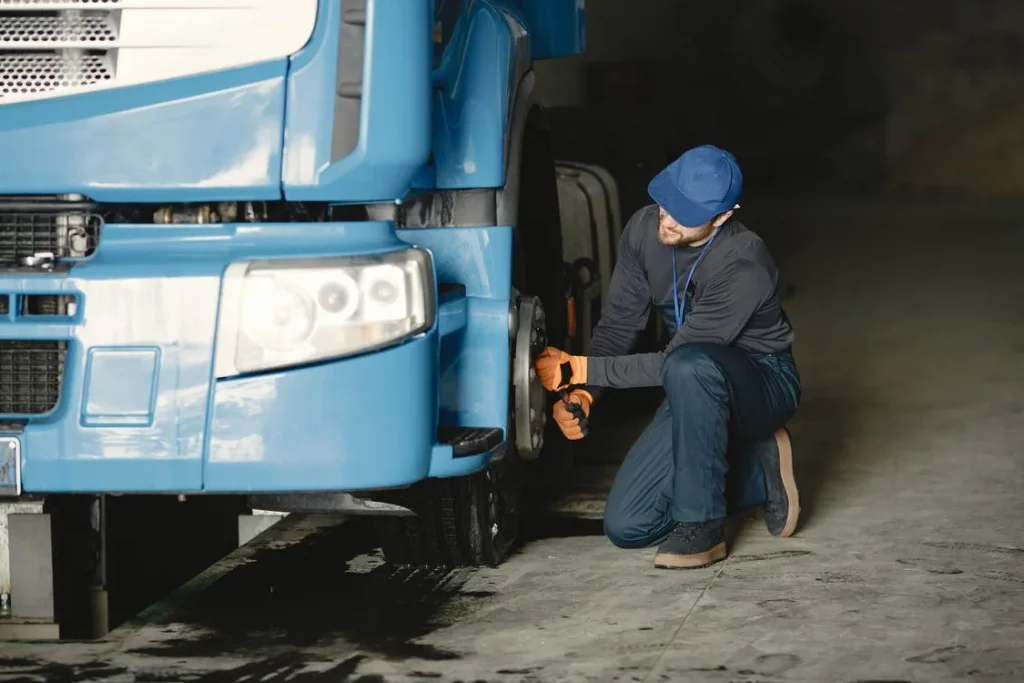
Truck ball joints are articulated suspension components that allow a wheel or steering knuckle to move with the suspension while also changing direction during steering. They are commonly positioned between a control arm and steering knuckle in suspension designs that require movement in several directions.
Because ball joints influence wheel positioning and steering geometry, excessive wear can affect handling, tyre wear and suspension stability.
Commercial vehicles may place substantial loads through these joints, so routine inspection is important, particularly on vehicles exposed to rough roads, high mileage or demanding duty cycles.
What Is a Truck Ball Joint?
A ball joint works in a similar way to a human hip joint.
A hardened ball stud sits inside a socket and can pivot through a controlled range of movement. The stud is normally connected to one suspension component while the joint housing is mounted to another.
In many suspension designs, a ball joint connects:
- A control arm to the steering knuckle.
- A suspension link to a wheel-carrying component.
- Other articulated steering or suspension assemblies.
The joint must allow both angular and rotational movement while remaining tight enough to maintain the intended wheel position.
Ball joints therefore form an important connection within the wider truck suspension system.
How Do Truck Ball Joints Work?
As the wheel moves up and down, the control arm changes angle relative to the steering knuckle.
At the same time, the steering system turns the knuckle left or right.
The ball joint allows both movements to occur through one articulated connection.
A typical ball joint may contain:
- Ball stud.
- Socket or housing.
- Bearing surface.
- Grease or lubricant.
- Dust boot.
- Retaining components.
- Mounting taper, flange or press-fit section.
The dust boot helps keep grease inside the joint while preventing water, dirt and road contaminants from entering.
If the boot becomes torn, contamination can accelerate wear of the internal surfaces.
What Are the Symptoms of a Bad Truck Ball Joint?
Truck ball joints wear often develops gradually. Common warning signs can include:
Clunking or Knocking
Excessive clearance inside the joint can allow the ball stud to move inside the socket.
This may produce knocking when:
- Driving over bumps.
- Turning.
- Braking.
- Accelerating.
- Travelling across uneven surfaces.
Suspension bushings, shock absorber mounts and stabiliser links can create similar noises, so sound alone should not be used as the final diagnosis.
Steering Looseness
A worn truck ball joints can allow the steering knuckle to move independently of its intended position.
The driver may notice:
- Vague steering.
- Wandering.
- Increased steering corrections.
- Reduced directional stability.
- Changes in steering response.
Tie rod wear can produce similar symptoms. If the looseness appears more closely related to the steering linkage, compare it with symptoms of bad tie rods.
Uneven Tyre Wear
Excess ball-joint movement can alter wheel position as the vehicle is driven.
This may contribute to irregular tyre wear, particularly when combined with alignment changes.
Tyre wear can also result from:
- Incorrect inflation.
- Wheel alignment.
- Worn control-arm bushings.
- Damaged tie rods.
- Wheel bearing wear.
- Axle alignment problems.
The complete suspension and steering system should therefore be inspected.
Changes in Wheel Alignment
Ball joints help maintain the relationship between the control arm and steering knuckle.
When clearance becomes excessive, wheel alignment angles can change under load.
Depending on suspension design, this may influence camber, caster or toe indirectly.
A wheel alignment should not be used as a substitute for replacing a joint with excessive mechanical play.
What Causes Truck Ball Joints to Wear Out?
Ball joints move continuously while a truck is being driven.
Wear rate depends on several factors.
High Mileage
Repeated movement gradually wears the internal bearing surfaces.
Commercial vehicles that travel long distances can accumulate large numbers of suspension and steering cycles.
Rough Roads
Potholes and uneven road surfaces create impact forces through the wheel, steering knuckle and control arms.
These forces can increase the load placed on the ball joint.
Heavy Vehicle Loads
Higher axle loads create greater forces throughout suspension components.
Vehicles carrying heavy or repeated loads may place greater demand on their joints.
Damaged Dust Boots
A torn or missing boot can allow water and abrasive contaminants to enter the joint.
Once contamination reaches the internal surfaces, wear can accelerate rapidly.
Loss of Lubrication
Some joints are sealed for life, while others may use grease fittings.
A serviceable joint that is not lubricated according to specification can wear prematurely.
How Are Truck Ball Joints Inspected?
Ball-joint inspection varies by suspension design, so the correct manufacturer procedure should always be used.
Inspection may include:
- Visual inspection of the dust boot.
- Checking for grease leakage.
- Looking for corrosion or physical damage.
- Measuring vertical or axial movement.
- Measuring lateral or radial movement.
- Checking for abnormal movement while the suspension is correctly loaded or unloaded.
- Comparing movement with manufacturer limits.
Simply shaking the wheel without understanding the suspension design may not accurately identify which joint is worn.
Movement can also come from wheel bearings, tie rods or control-arm bushings.
Ball Joint or Control Arm Bushing: Which Is Bad?
These two components can create similar symptoms, but they fail in different ways.
A ball joint develops wear between the ball stud and socket.
A control arm bushing usually deteriorates through:
- Cracking.
- Rubber separation.
- Deformation.
- Excessive movement around its sleeve.
If the control arm moves excessively at the chassis mounting point, investigate control arm bushing symptoms.
If movement occurs at the articulated connection between the control arm and steering knuckle, the ball joint becomes a stronger suspect.
Both should be inspected because a control arm may use bushings at one end and a ball joint at the other.
Can You Drive With a Bad Ball Joint?
A ball joint with measurable wear should not be ignored.
Minor wear that remains within manufacturer tolerances is different from a joint with substantial free movement, but severe ball-joint failure can affect wheel positioning and steering control.
Warning signs requiring prompt inspection include:
- Significant joint play.
- Severe clunking.
- Sudden steering changes.
- Abnormal wheel movement.
- Damaged or separated joint components.
- Rapidly worsening tyre wear.
If the condition of the joint is uncertain, a qualified commercial vehicle technician should assess it.
How Often Should Truck Ball Joints Be Replaced?
There is no universal mileage at which every truck ball joint should automatically be replaced.
Service life depends on:
- Vehicle design.
- Road conditions.
- Vehicle load.
- Joint construction.
- Lubrication.
- Environmental exposure.
- Maintenance practices.
Condition-based inspection is therefore more reliable than replacing every joint at a fixed mileage.
For a deeper answer, see how often ball joints should be replaced.
How to Choose the Correct Replacement Truck Ball Joints
Commercial vehicle truck ball joints should be identified by application rather than visual appearance alone.
Before ordering, confirm:
- Vehicle manufacturer.
- Model.
- Production year.
- Chassis or vehicle identification information.
- Axle position.
- Upper or lower position where applicable.
- Left or right side if specified.
- OE part number.
- Mounting dimensions.
- Stud taper and thread.
- Control arm compatibility.
Similar-looking ball joints may differ in load rating, stud size or mounting configuration.
Correct parts identification reduces the risk of installation problems and premature wear.
How Much Does Truck Ball Joints Replacement Cost?
Cost can vary significantly depending on the vehicle, whether the joint is sold separately or with a complete control arm, and the labour required to access and install it.
A press-fit ball joint may require more labour and specialised equipment than a bolt-on design.
For a dedicated breakdown, see our guide to truck ball joints replacement cost.
Ball Joints Connect Suspension Movement With Steering Control
Ball joints are important because they allow suspension articulation while helping the steering knuckle remain correctly positioned.
As wear develops, excessive clearance can lead to noise, steering looseness, wheel alignment changes and tyre wear.
Regular suspension inspection, particularly on high-mileage or heavily loaded commercial vehicles, can identify deterioration before joint movement becomes severe.
For a wider overview of linkage, steering arms and related components, see our truck steering parts guide.
Need Truck Ball Joints Replacement?
If you need ball joints, control arms or other truck suspension components for fleet, workshop, distribution or bulk purchasing requirements, contact our sales representatives.
You can also search for commercial vehicle replacement parts through the commercial vehicle spare parts online store.