

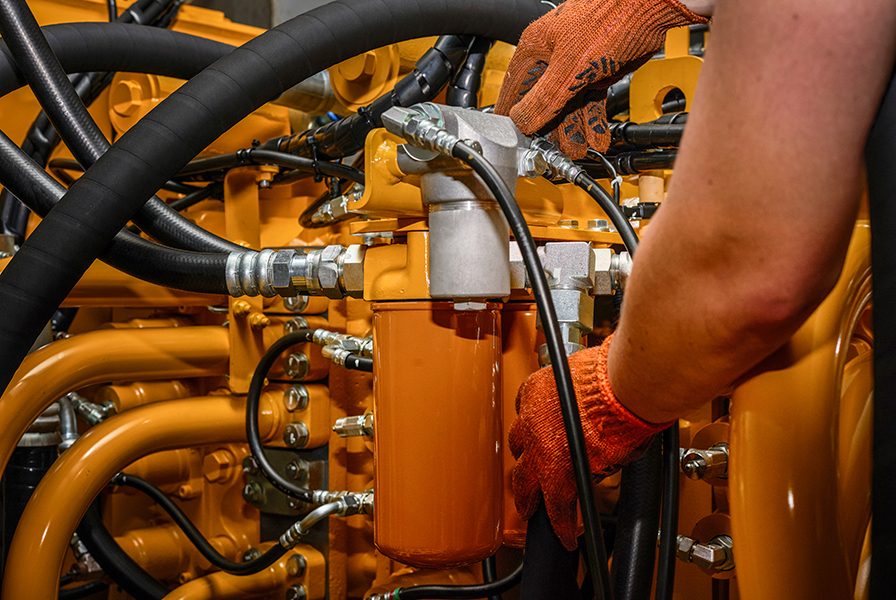
Hydraulic filters protect a truck’s hydraulic system by removing solid contaminants from hydraulic fluid before those particles can damage pumps, valves, cylinders and other precision components. Their main benefit is not simply cleaner oil: effective hydraulic filtration helps maintain reliable fluid flow, reduce component wear and extend the service life of the hydraulic system.
Commercial vehicles can operate under high loads, vibration, temperature changes and dusty conditions. These operating environments make contamination control especially important because even small particles circulating repeatedly through hydraulic components can accelerate wear.
For trucks fitted with hydraulic equipment or auxiliary hydraulic systems, choosing and maintaining the correct hydraulic filter is therefore an important part of preventive maintenance.
What Does a Hydraulic Filter Do?
A hydraulic filter captures contaminants suspended in hydraulic fluid as the fluid circulates through the system.
Potential contaminants can include:
- Dust and dirt entering from the operating environment
- Metal particles produced by component wear
- Rubber or seal material
- Rust and corrosion particles
- Residue created during maintenance
- Contamination introduced when hydraulic fluid is added
Without adequate filtration, these particles can circulate through narrow passages and precision surfaces inside pumps, control valves and actuators.
Hydraulic filtration is one part of a larger vehicle filtration strategy. Trucks may also rely on engine air, oil, fuel, cabin, transmission and other filters. Our guide to truck filtration parts explains how these filtration components serve different systems within a commercial vehicle.
1. Hydraulic Filters Help Protect Expensive Components
One of the most important benefits of hydraulic filters is their ability to protect components that operate with small internal clearances.
Hydraulic pumps and control valves depend on precisely fitted surfaces to create pressure and control fluid movement. Abrasive particles passing between these surfaces can cause scoring and gradual wear.
As wear increases, internal leakage can develop and hydraulic efficiency may decline.
Removing contaminants before they repeatedly circulate through the system reduces this abrasive effect and can help protect:
- Hydraulic pumps
- Control valves
- Cylinders
- Actuators
- Motors
- Seals and associated components
Good filtration therefore supports the entire hydraulic circuit rather than protecting only one individual part.
2. Cleaner Hydraulic Fluid Can Extend System Life
Hydraulic fluid transfers power, lubricates components and helps carry heat through the system. Its condition directly affects hydraulic-system reliability.
Contaminated fluid can increase friction and accelerate component deterioration. As components wear, they may release additional particles into the fluid, creating a cycle in which contamination produces wear and wear produces more contamination.
A correctly specified hydraulic oil filter helps interrupt that cycle by continuously removing harmful particles from the circulating fluid.
This makes filtration an important part of maintaining hydraulic-fluid cleanliness over the service life of the equipment.
3. Effective Filtration Can Reduce Unplanned Downtime
Unexpected hydraulic-system failures can take a commercial vehicle or piece of equipment out of operation.
The resulting cost may include more than replacement parts. Fleet operators can also face:
- Workshop labour
- Vehicle recovery
- Lost operating hours
- Delayed deliveries or jobs
- Secondary damage to related components
A hydraulic filter cannot prevent every hydraulic failure, but controlling contamination addresses one major source of component wear.
Replacing filters according to the vehicle or equipment manufacturer’s maintenance requirements is generally much less disruptive than dealing with a damaged pump, valve or hydraulic assembly.
4. Good Dirt-Holding Capacity Supports Longer Filter Service
Hydraulic filters differ in how much contamination their filter media can retain before restriction becomes excessive.
This characteristic is commonly described as dirt-holding capacity.
A filter with suitable dirt-holding capacity can capture contaminants throughout its intended service interval while continuing to permit the required hydraulic-fluid flow.
However, a larger dirt capacity does not mean a filter should simply remain installed indefinitely. Actual service life depends on operating conditions, filter design, fluid cleanliness and the manufacturer’s maintenance specification.
Trucks working in harsh or contaminated environments may require more frequent inspection than vehicles operating under relatively clean conditions.
5. Correct Filtration Helps Maintain Hydraulic Performance
A hydraulic system depends on fluid reaching components at the required flow and pressure.
Contamination can interfere with this process by damaging surfaces, obstructing narrow passages or contributing to sticking valves. Over time, hydraulic functions may become slower, less consistent or less efficient.
The correct filter helps maintain cleaner fluid while allowing sufficient flow through the system.
This is why selecting a filter solely because it physically fits is not enough. Filtration efficiency, flow capacity and application compatibility all matter.
6. Bypass Valves Can Protect Fluid Flow Under Certain Conditions
Some hydraulic filter assemblies incorporate a bypass valve.
When restriction across the filter becomes too high—for example, because the filter element is heavily loaded or because cold hydraulic fluid is temporarily very viscous—the bypass valve may allow oil to continue circulating.
This can prevent severe flow starvation.
However, fluid flowing through the bypass may not receive normal filtration. A filter repeatedly operating in bypass should therefore not be treated as functioning normally.
Excessive filter restriction may indicate that the element requires inspection or replacement, or that another condition within the hydraulic system needs attention.
7. Hydraulic Filters Support Preventive Fleet Maintenance
For fleet operators, filtration is most useful when treated as part of planned maintenance rather than as a component replaced only after symptoms appear.
Routine hydraulic-system maintenance can include:
- Checking hydraulic-fluid level and condition
- Inspecting hoses and connections for leaks
- Monitoring filter restriction indicators where fitted
- Looking for unusual contamination in used filters or fluid
- Following specified filter replacement intervals
- Using the correct hydraulic fluid
- Investigating recurring contamination
Used filter elements can also provide useful clues about system condition. Unusual amounts of metallic debris, for example, may warrant further inspection rather than simply fitting another filter.
Fleet operators managing several filtration systems may also find it useful to compare available semi-truck filters according to vehicle application and manufacturer requirements.
How Do You Choose the Right Hydraulic Filter?
A replacement hydraulic filter must match the operating requirements of the hydraulic system.
Important considerations include:
Filtration Rating
The filter media must provide the level of particle control required by the hydraulic components. Finer is not automatically better if the filter creates unacceptable restriction.
Flow Capacity
The filter must accommodate the hydraulic system’s required flow rate. An incorrectly sized filter may create excessive pressure drop.
Pressure Rating
Hydraulic filters are designed for specific pressure conditions depending on where they are installed in the circuit. A filter used in a pressure line may face very different demands from one fitted in a return or suction line.
Filter Construction
Spin-on filters, cartridge elements and other designs may be used depending on the hydraulic system.
Application Compatibility
Always confirm the correct part number and specification for the truck, equipment and hydraulic system. Filters that appear similar externally can have different filtration characteristics or operating limits.
When maintaining other vehicle systems at the same time, understanding the broader range of truck spare parts can help fleet operators plan maintenance around related components rather than treating each replacement separately.
When Should a Truck Hydraulic Filter Be Replaced?
There is no single replacement interval that applies to every hydraulic filter.
The correct interval depends on the vehicle or equipment manufacturer’s specification, filter type, hydraulic-fluid condition, operating hours and working environment.
Possible indications that the filtration system requires attention include:
- A filter restriction warning or indicator
- Reduced hydraulic responsiveness
- Unusual hydraulic noise
- Evidence of contaminated fluid
- Repeated component problems
- A filter that has reached its scheduled service interval
These symptoms do not automatically prove that the hydraulic filter is the cause. Hydraulic systems contain many interacting components, so persistent pressure, noise or performance problems should be properly diagnosed.
Hydraulic Filtration Is a Small Component With a System-Wide Role
Hydraulic filters may be relatively small compared with pumps, cylinders and other hydraulic components, but their function affects the cleanliness of the fluid circulating throughout the system.
The right hydraulic filter helps control contamination, reduce abrasive wear, protect precision components and support reliable hydraulic operation. For commercial vehicles, these benefits can contribute to longer component life and fewer contamination-related maintenance problems.
The key is to use a filter that meets the hydraulic system’s required filtration, flow and pressure specifications and to replace it according to the appropriate maintenance schedule.
For fleets sourcing hydraulic filters or other commercial vehicle filtration components, KCH can assist with identifying suitable parts based on the vehicle and application.